
Most people reach out to a watch manufacturer before they’ve actually decided what they’re building. That’s not a criticism — it’s just the natural order most first-time founders follow. The problem is that a factory can only give you a useful, accurate answer once you can answer a few basic questions about your own project.
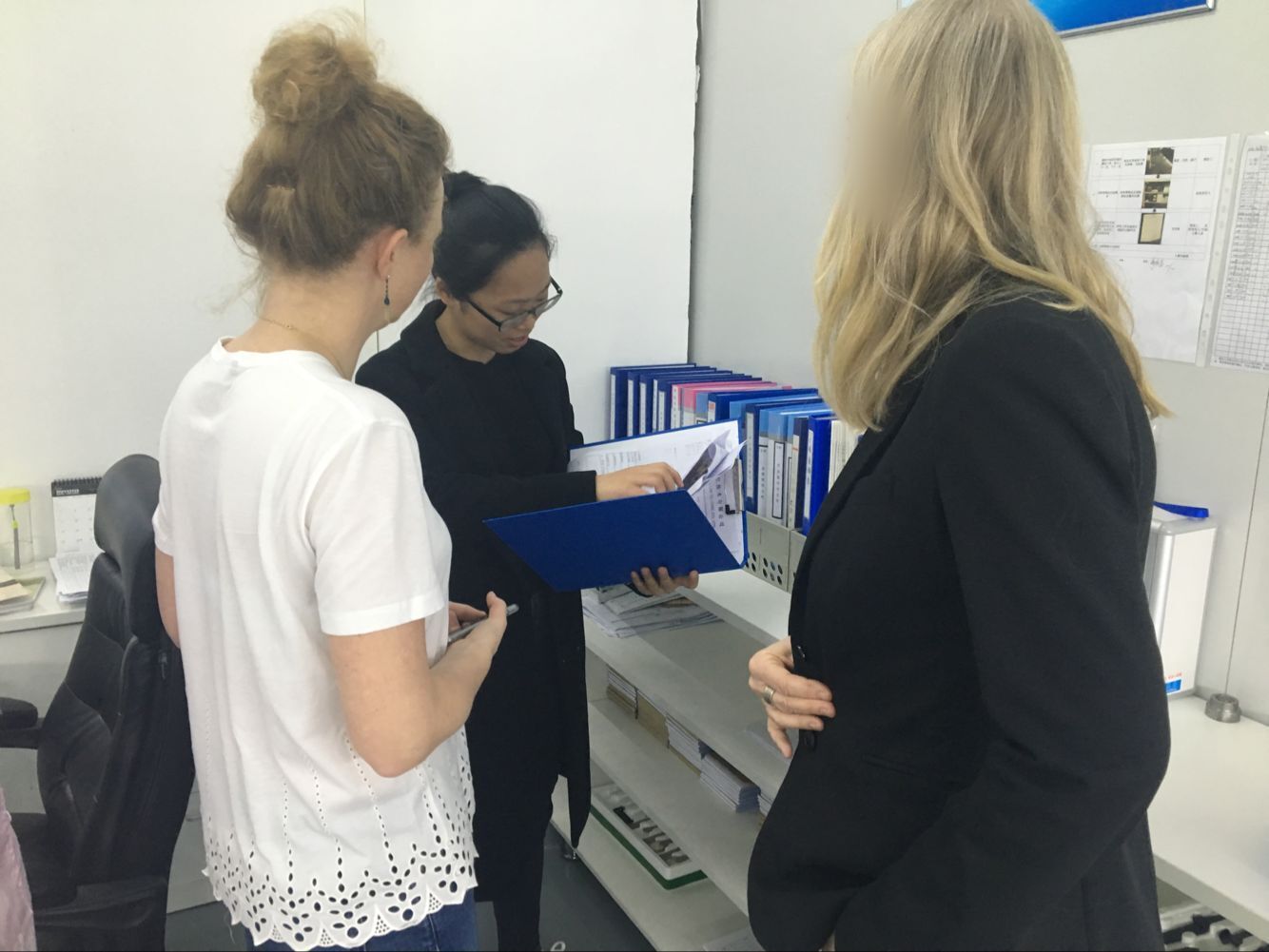
Based on our experience manufacturing watches in Dongguan since 2009, the most reliable indicator of a factory quality is their willingness to walk you through their defect log. We have learned that transparent factories produce the fewest surprises.
If you send a factory a message that says “I want to make watches, what’s your price?” you’ll get a generic reply back, because there’s no way to quote a project that isn’t defined yet. If you show up with five clear answers, you’ll get a real conversation — a realistic MOQ, an honest timeline, and a quote that won’t change three times before production starts.
This guide walks through the five decisions worth making before your first email to a factory. Think of it as the conversation you should have with yourself first.
1. Are You Building an Original Design, or Starting From an Existing One?
This is the single decision that shapes everything downstream: your cost, your MOQ, your timeline, and even which manufacturer is a good fit for you.
Fully custom (OEM): You’re designing the case, dial, hands, and packaging from scratch. This gives you full ownership and a genuinely unique product, but it means tooling costs, longer development time, and typically a higher MOQ, since the factory is opening new molds specifically for your design.
Semi-custom (ODM): You start from an existing case platform and customize the dial, colorway, branding, and packaging. This is faster, cheaper to enter, and usually allows a lower MOQ — often a fraction of what a fully custom mold requires — because the factory is reusing tooling it already owns.
Neither path is “better.” A first collection built to test market response is often better served by ODM. A brand with a distinctive design language it wants to protect long-term usually needs OEM. Most experienced manufacturers will actually recommend starting with ODM for a first run and moving to OEM once you have sales data to justify the tooling investment.
→ If you’re still weighing this, our OEM vs ODM breakdown goes deeper into the trade-offs.
2. What’s Your Realistic Order Volume — Not Your Hoped-For One?
This is where a lot of first-time brands get their own budgeting wrong. There’s a natural instinct to think in “what if this takes off” numbers rather than “what can I actually sell in the first 90 days” numbers.
MOQ isn’t an arbitrary gate a factory puts up to be difficult. It’s tied to real costs: bulk material purchasing, mold amortization, and the setup cost of running a production line for your specific spec. A factory quoting 500 pieces on a fully custom mechanical watch isn’t padding the number — that’s roughly the point where the unit economics start to work for both sides.
Before contacting anyone, get honest with yourself about three numbers:
- How many units can you realistically pre-sell or move through your existing channel in the first quarter?
- How much capital can you commit to inventory without straining cash flow?
- Is this a market test, or a committed first collection?
If your honest answer is closer to 50–300 units, that changes which manufacturing model and which type of partner makes sense — and it’s worth saying that number out loud in your first message, rather than letting a factory find out three emails later.
→ For how order volume maps to actual pricing tiers, see MOQ, Pricing & Cost Structure.
3. What Price Point Are You Actually Building For?
Materials and movement should follow your retail price — not the other way around. It’s a common (and expensive) mistake to fall in love with a titanium case and a Swiss automatic movement, then work backward and discover the unit cost makes profitable retail pricing impossible.
A useful exercise before you talk to any factory: write down your target retail price, then work backward using a realistic margin structure to figure out what your landed unit cost ceiling actually is. That number — not a mood board — should guide your material and movement conversation.
Roughly, positioning tends to fall into a few bands:
- Entry / gift-price watches: alloy or stainless steel cases, quartz movements, simpler dial work.
- Mid-range brand watches: 316L stainless steel or titanium, Japanese quartz or automatic movements, sapphire crystal.
- Premium / collector-oriented watches: Swiss movements, higher-grade finishing, more complex case engineering.
None of these are fixed rules, but knowing which band you’re in before your first conversation will save you from proposing a spec your business model can’t actually support.
4. How Involved Do You Want to Be in the Development Process?
Some founders want to review every material choice, sign off on every prototype revision, and stay closely involved through sampling. Others want to hand over a clear brief and receive a finished product with minimal back-and-forth. Neither approach is wrong, but it’s worth knowing which one you are before you start, because it affects what kind of manufacturing partner will actually work well with you.
If you want heavy involvement, look for a factory with in-house design and engineering — not just a trading company relaying your requests to a third-party workshop. If you’d rather approve a small number of well-considered options, an ODM catalog-based approach with a manufacturer that has strong design instincts of its own may suit you better.
This also affects how you should structure your first message: describe not just what you want to build, but how you want to work.
→ Product Development & Sampling: What Actually Happens walks through what this collaboration looks like in practice.
5. What Does “Good Enough to Ship” Actually Mean for Your Brand?
Every factory will tell you they do quality control. What actually matters is where the quality bar sits for your specific product, and whether that bar is written down anywhere both sides agree on.
Before you contact a manufacturer, think through:
- What water-resistance rating does your product actually need, given how it’ll be used and marketed?
- What’s an acceptable cosmetic tolerance — for finishing, dial alignment, case gaps — for your price point?
- Do you need third-party inspection, or is factory-reported QC sufficient for your first order?
You don’t need finished answers to all of this before you reach out. But naming your priorities upfront — “water resistance and dial finishing matter most to me” — helps a factory tell you honestly whether they’re a good match, instead of both sides discovering a mismatch after a deposit has already been paid.
→ For how this is typically structured, see Production Control, Quality & Risk Management.
Putting It Together
None of these five decisions need to be perfect before you reach out — sourcing is genuinely a conversation, and a good manufacturing partner will help you refine answers you’re only half-sure about. But walking in with a rough position on design ownership, volume, price point, involvement level, and quality bar changes the entire quality of that first conversation. It’s the difference between a generic price list and a real production plan.
Once you’ve got a working answer to these five, the practical next questions — how sampling works, how lead times are structured, what happens if something goes wrong in production — are covered in the rest of our manufacturing insights.
Ready to talk through your project? Get in touch with a rough answer to the five questions above, and we’ll tell you honestly what’s realistic.
Related reading: How to Choose a Watch Manufacturer (Practical Guid · How to Vet a Reliable Watch OEM Factory in China: · Real Cost of Watch OEM Manufacturing in 2026: Tari
Visit the factory (or video audit), ask for their defect log, check their existing client portfolio, request material certificates for components, and review their QC process documentation. A factory audit visit typically costs $500-1,500 in travel but can save 10-20% on total project cost. Trading company margins typically add 10-20% to factory-direct pricing, but may save $2,000-5,000 in coordination costs for first-time buyers.
Red flags include: no physical address or factory photos, reluctance to show defect logs, quotes significantly below market average, no material certificates, pushback on QC inspections, and no experience with your target market quality standards.
Factories offer lower unit cost and direct technical communication. Trading companies provide coordination, quality control, and logistics support. First-time brands often benefit from a trading company project management, while experienced brands save 10-20% by going direct to factory.
Sources: Watch (Wikipedia) · Federation of the Swiss Watch Industry