

Most factories will give a rough figure—”50-60 days”—but they won’t tell you what that number includes, and more importantly, they won’t tell you what it excludes. This page will provide a detailed and complete production schedule, explaining only the real reasons behind it, and outlining how to handle unexpected situations after production is complete.
Every stage has its own timeline. The total depends on your customization level, how quickly decisions are made, and whether specs stay stable throughout. These are working benchmarks, not guarantees.
| Stage | Typical range | What drives it longer |
|---|---|---|
| Spec confirmation | 3–7 days | Unclear brief, frequent changes, back-and-forth on movement or material choices |
| Sample development | 3–8 weeks | New case tooling (+2–4 weeks), complex dial structure, custom components not in stock |
| Sample revisions | 1–3 weeks / round | Structural changes restart the clock; slow client decision-making adds days between rounds |
| Mass production | 4–8 weeks | Large orders, complex finishing (PVD, DLC), component sourcing delays |
| Post-production (QC, packing, docs) | 1–2 weeks | QC rework, export documentation, customs preparation |
| Total: specs confirmed → goods at port | 3–5 months | Add 4–6 weeks sea freight (US/EU) for door-to-door. Air freight is faster but costs significantly more. |
The clock starts from confirmed specs — not from “I have an idea.” Logo-only ODM projects can be significantly faster. New case tooling adds 4–6 weeks minimum.
These aren’t edge cases — they come up in most production runs where expectations weren’t aligned with reality from the start.
Production complete ≠ shipment ready. Final QC, packing, export documentation, and customs prep all happen after the line closes — and each can take days to over a week.
Delays have patterns. Component shortages and QC rework are common and traceable. Vague delays with no root cause — just "we need more time" — are a different signal entirely.
Depends on what was approved. Defects not present in your approved sample are the factory's responsibility. Issues that trace back to specs or materials you confirmed are shared.
Plan from delivery, not production finish. Work backward from your launch date including freight and customs. Most failures happen in the spec and revision phase — not during production.
Not all delays mean the same thing. Knowing the root cause helps you respond correctly instead of just pushing harder on the factory.
| Cause | What it usually means | Signal |
|---|---|---|
| Component out of stock | Movement, crystal, or strap supplier lead time extended — common, traceable, documentable | Manageable |
| QC rework in progress | A batch failed inspection — factory is correcting before shipping rather than hiding it | Responsible |
| Spec change mid-production | A change after the line started — restarts affected parts of the process, causes compounding delays | Avoidable |
| Vague update, no explanation | Factory managing the message rather than the problem — follow up with a specific root cause request | Red flag |
| Production capacity conflict | Your order deprioritized for a larger client — happens without clear scheduling agreements in the contract | Negotiable |
The most common planning mistake: counting your launch date from when production finishes — not from when goods clear customs. For brands shipping to the US or EU, add 4–6 weeks for sea freight and customs clearance on top of your production completion date.
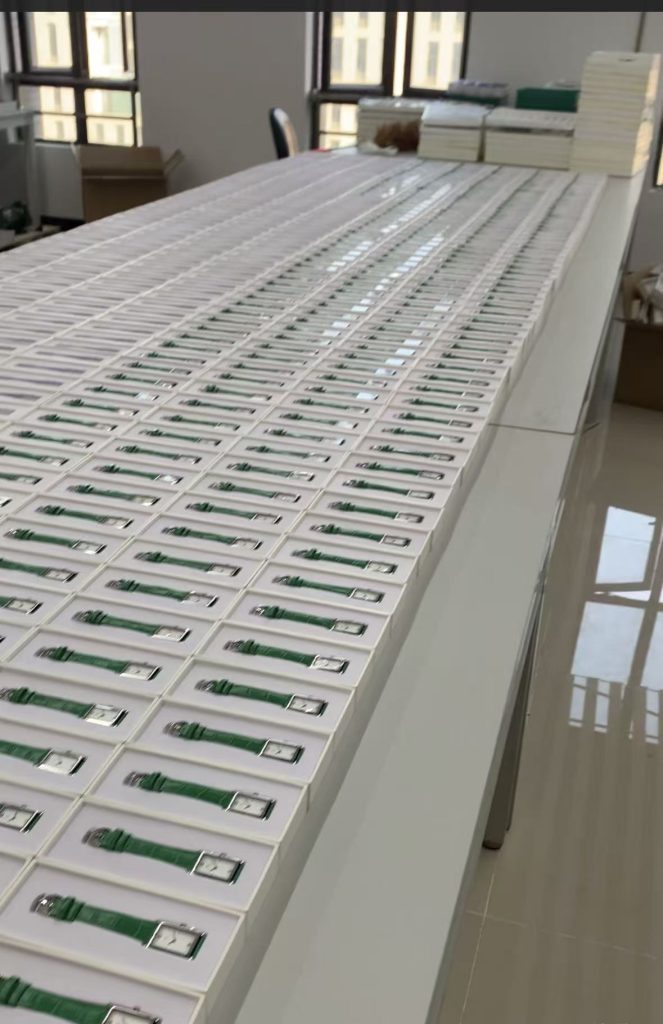
The 7 most common delay causes, what each means for your order, and how to tell if your factory is handling it correctly.
Reliability shows up under pressure — not at the start. The communication patterns, red flags, and behavior signals that predict how a factory will actually perform on delivery.
What responsible factories do when issues appear after shipment — how rework decisions are made, and what protects brands from absorbing costs that aren’t theirs.
That’s the most important thing to tell us upfront. We can work backward from your target date and tell you what’s realistic — and what needs to be decided before anything can be committed.
If you’re evaluating manufacturing partners or still defining your production specs, our Watch Manufacturing FAQ covers the questions buyers ask most often. Or explore every stage of the process in our Watch Manufacturing Insights hub.
WhatsApp us