
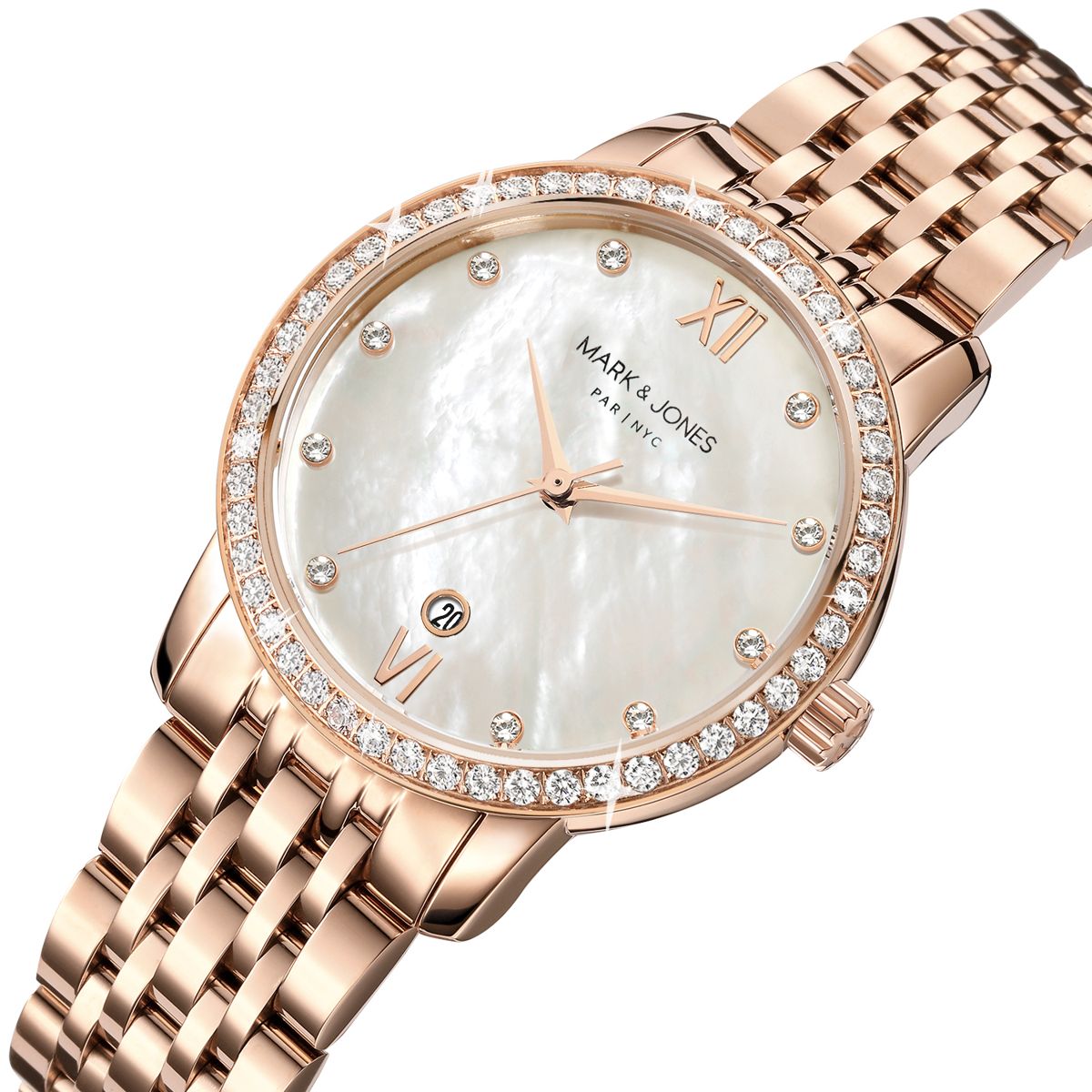
You’ve probably heard that luxury watches are held to a different inspection standard than regular OEM production. That’s true. What’s harder to find is what that actually means in practice — because most of what’s published online is either a marketing claim with no real number behind it, or a precise-sounding figure nobody can actually verify.
Based on our experience manufacturing watches in Dongguan since 2009, the gap between luxury inspection standards and standard OEM is wider than most buyers expect. Luxury inspection is defined by what it rejects — and a standard OEM line will pass the same dial that a luxury line would quarantine. The cost difference is real: inspection labor alone can add $3-8 per unit at the luxury tier, on top of the base movement cost.
This article skips both. It focuses on two components — the case and the dial — and walks through what genuinely changes when a brand asks for luxury-tier inspection instead of standard OEM inspection.
It’s Not About One Secret Number
If you go looking for a clean table of “standard OEM tolerance vs. luxury tolerance,” you won’t find one that holds up. The specific numbers you see published — a case machined to plus-or-minus some fraction of a millimeter, a dial color matched to some exact tolerance — mostly come from individual factories describing their own equipment, not from an independent standard everyone follows. Different factories, different capabilities, different numbers.
The real difference isn’t a hidden number. It’s whether a system gets used at all — full inspection instead of spot-checking, tighter sampling rules, better tools, and a written record of what was actually checked.
This article assumes you already understand the basics of how factory QC works day to day. If you want that primer first, see our explainer on how watch QC actually works — this piece goes narrower, into just the case and dial, and just the luxury-vs-standard question.
Before you get into inspection standards, it’s worth knowing that this decision starts earlier than QC — case and dial finishing choices get locked in during design and prototyping, and the inspection standard you want should be part of that conversation from day one, not something you add after the fact.
The Case: What Changes at the Luxury Tier
Full-dimension checks instead of sampling
Standard OEM production typically inspects cases against functional tolerances — dimensions that are checked on a sample from each batch, with the goal of confirming the case fits the movement, closes properly, and passes water resistance testing. That’s enough to ship a reliable watch.
Luxury-tier inspection tends to go further: checking dimensions across a higher percentage of units, sometimes every unit, rather than relying on a batch sample to represent the whole run. The cost of this is time and labor. The benefit is catching drift within a batch — a case that’s technically within spec but trending toward the edge of tolerance — before it becomes a returned watch.
How chamfering actually gets inspected
Chamfering — the beveled edge along a case’s lugs or lines, sometimes called anglage in traditional watchmaking language — is one of the clearest visual signals of finishing quality, and it’s inspected differently depending on how it was made.
Machine-chamfered edges are consistent and fast to produce, and a standard visual check catches most defects. Hand-applied chamfering, more common in higher-tier finishing, gets checked differently: inspectors look at edge sharpness and how light reflects evenly along the bevel as the case is tilted. An uneven reflection — a “wave” in the line instead of a clean one — signals inconsistent hand work, even when the edge measures fine dimensionally. This is a visual judgment call more than a measured one, which is exactly why it takes an experienced inspector to catch it reliably.
[ADD: HTIMES production note — how your QC team actually checks chamfer quality, and roughly how much longer hand-finished chamfering takes per unit compared to machine-chamfered]
Surface finish consistency
Brushed and polished surfaces need consistent direction and consistent depth across a case — a brushed surface with grain lines running two different directions, or a polished surface with a slightly duller patch, reads as a defect at the luxury tier even though it wouldn’t necessarily fail a standard functional check. This kind of inspection is done under angled light, often with the case rotated slowly to catch inconsistencies that don’t show up under flat, overhead lighting.
The Dial: What Changes at the Luxury Tier
Printing edge sharpness and index alignment
Dial printing — hour markers, logos, text — gets checked for edge crispness and alignment under magnification, not just at a glance. A printed line that looks fine to the naked eye can show a slightly blurred or feathered edge under a loupe, and index alignment that’s off by a fraction of a degree becomes visible once you’re checking multiple index positions against each other rather than eyeballing the dial as a whole.
Lume fill consistency
Luminous fill on hour markers and hands needs to be even in both application and eventual glow — gaps, air bubbles, or inconsistent thickness in the lume compound show up as dim or uneven spots later. This gets checked visually under normal light for application quality, and often under UV or in a darkened environment to confirm even glow before a batch ships.
Batch-to-batch color consistency
A dial color that matches perfectly on unit one and drifts slightly by unit two hundred is a common failure point, especially with sunburst or textured dial finishes where lighting angle affects perceived color. Luxury-tier inspection typically means checking color consistency across a wider spread of units within a batch, not just confirming the first article matches the approved sample.
[ADD: HTIMES production note — a real example of a color or lume consistency issue your QC team caught mid-batch, and what triggered the catch]
The Real Difference: AQL, Tools, and Documentation
Here’s where the comparison gets concrete enough to actually act on.
Sampling strictness (AQL). Most consumer goods manufacturing defaults to an AQL of 2.5 — an accepted quality limit that tolerates a small percentage of defects in a sampled batch. High-value goods commonly move to a stricter AQL, such as 1.0, meaning a much smaller allowable defect rate before a batch gets rejected. This is a standard practice across manufacturing generally, not a rule specific to watches — but it’s the single most concrete lever available when you’re deciding how strict you want your case and dial inspection to be.
Inspection tools. A 10x loupe is standard practice in jewelry and gemstone inspection, and high-end watch finishing has borrowed the same tool for the same reason: some defects — a feathered print edge, a micro-scratch in a polished surface — simply don’t show up reliably to the naked eye. Standard OEM inspection more commonly relies on visual checks under normal lighting, reserving magnification for specific flagged issues rather than routine inspection.
Documentation. The other real difference is whether inspection gets recorded at all. A luxury-tier process typically means a written or photographed record of what was checked, by whom, and what the result was — not just a verbal “it passed.” That record is what lets you audit the process later, or catch a pattern across multiple batches instead of treating each defect as a one-off surprise.
If you want to see how this fits into a factory’s overall QC process rather than just the case and dial pieces covered here, this breakdown of how QC is monitored end to end goes into that in more depth.
Choosing a Supplier: Why Willingness to Improve Matters More Than Price
At the standard described above — full-dimension checks, loupe-level inspection, a tightened AQL — almost no factory hits every requirement on the very first production run. That’s not a red flag on its own. It’s actually the wrong thing to screen for when you’re choosing a supplier.
Price and a quoted capability tell you what a factory believes it can do. They don’t tell you what happens when the first batch doesn’t meet spec — and at this inspection tier, it usually doesn’t, at least not yet.
Here’s a real example from our own production floor. One of our Swiss watch brand clients set a 100% loupe inspection standard — every single unit checked under magnification, not a sample. The first production run passed at around 20%. Under a normal OEM sampling standard, a number that low would be alarming. Under 100% loupe inspection specifically, it isn’t unusual — the standard is built to catch far more than a typical inspection would, so a lower first-pass yield is expected, not proof the factory can’t do the work.
What mattered was what happened next. Over several rounds — adjusting tooling, retraining the polishing line, tightening control at the printing stage, each round targeting the specific defects the loupe inspection had flagged — the defect rate came down to around 20%, meaning roughly 80% of units were passing on the first check. Under a 100% loupe standard, that’s not a mediocre result. That’s the process working the way it’s supposed to.
When you’re evaluating a supplier for luxury-tier work, ask about this directly instead of hoping for a guarantee no honest factory can give you upfront:
- Ask to see how a defect rate changed over a real production run, not just a single QC report from a good batch.
- Ask what happens on their end when a batch fails their own inspection — is there a documented process for finding the root cause, or does it just get reworked and resent without anyone asking why it failed in the first place?
- Ask if they’re willing to run a trial batch specifically to test this, knowing upfront that the first pass may not meet spec.
A factory that treats a failed first batch as a normal part of reaching luxury-tier quality is a very different partner from one that gets defensive, blames your spec, or quietly loosens the inspection standard to make the numbers look better on paper. That second behavior does far more damage to your product than a low first-pass number ever will.
Putting This Into Your Purchase Spec
None of this matters if it doesn’t make it into your contract. A factory that agrees verbally to “strict inspection” and a factory that has it written into your purchase spec are not the same commitment.
Three things worth writing in, specifically:
- Name the AQL level. Don’t just say “strict quality control” — write the actual number, whether that’s 1.0 or something stricter, and confirm the factory understands what that means in practice.
- Require inspection records, not just a pass/fail result. Ask for photos or written notes at the case and dial inspection stage specifically, not just a final QC summary.
- List chamfer and finish defects as their own reject category, separate from functional defects. A case that works fine but has an uneven bevel line shouldn’t get lumped in with — or excused by — a case that passes on function alone.
Exact tolerances vary by factory and by design, so confirm specific numbers with your supplier at the sampling stage rather than assuming a number from any published source, including this one. What you can control from the start is the process: what gets checked, how often, with what tools, and whether it gets written down.
If you’re specifying case and dial inspection standards for your next order, HTIMES’ watch manufacturing services can walk through what a luxury-tier inspection process actually looks like for your specific design, from sampling through final QC.
Luxury inspection adds dial print alignment checks under magnification, lume application uniformity grading, case-back torque verification, water-resistance testing on 100% of units (not batch sampling), and a final cosmetic grading where watches with micro-defects are quarantined rather than shipped.
Inspection labor alone adds $3-8 per unit at the luxury tier compared to standard OEM QC. For a 500-piece run, that is $1,500-4,000 in additional inspection cost — on top of the slower line speed that luxury standards require.
Some can, but most lack the trained inspectors and equipment. Luxury inspection requires dedicated QC staff with magnification stations, not a roaming inspector. If your brand needs luxury-grade QC, ask whether the factory has a separate inspection line or dedicates staff — not just whether they “can do it.”
Sources: Watch (Wikipedia) – Federation of the Swiss Watch Industry