
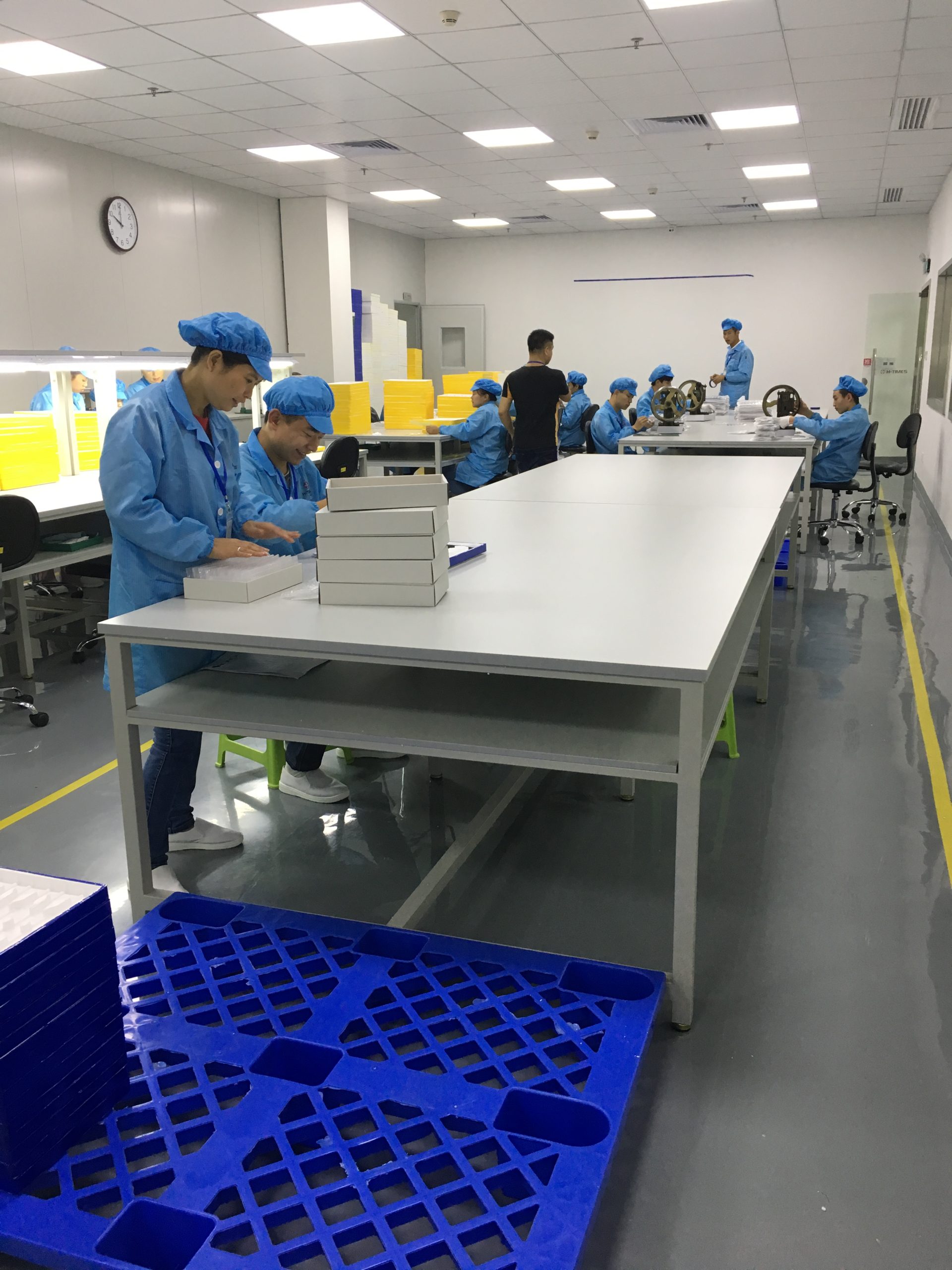
Most brands never see what happens between “the samples look great” and “the shipment arrives.” That gap is watch assembly before shipment — and it is where quality is either locked in or quietly lost.
After years of overseeing watch assembly in Dongguan and Shenzhen, we have seen the same pattern repeat: the components are correct, the samples passed, but something in the assembly process — hand alignment, water resistance testing coverage, packing discipline — was not controlled. The result is a shipment where 5% to 15% of pieces have defects that should have been caught before the watch left the factory floor.
What Happens During Watch Assembly
A finished watch comes together in a fixed sequence. Each step depends on the one before it, and shortcuts at any point show up later in failure rates:
- Case preparation. Cases are cleaned, checked for machining marks, and inspected for plating or coating consistency before anything is installed. Plating defects that look fine under factory lighting can show up as dull spots under natural light — a problem we describe in detail in Why Some Gold Watches Look Bright and Others Dark.
- Movement installation. The movement is mounted and the stem and crown are fitted. This is where handling discipline matters most — a damaged stem or misaligned movement will cause winding problems within weeks of delivery.
- Dial and hands. Dials are inspected for print defects, then hands are mounted and aligned. Misaligned hands are one of the most common — and most visible — assembly defects. For a deeper look at how dial defects compare to movement issues, see Watch Quality Inconsistency: Why It’s Rarely the Factory’s Fault.
- Strap or bracelet fitting. End pieces are matched, spring bars are seated, and the fit is verified on the actual case. A strap that looks correct but sits loose will feel cheap to the end customer.
- Water resistance testing. Every piece is pressure tested when water resistance is claimed. This is non-negotiable, not a spot check. We explain why this matters in Common Waterproof Failures in Watch Mass Production.
- Final QC and timing checks. Accuracy is verified against the movement spec, and the watch is visually inspected under controlled light. For the full QC process, read Watch Quality Control in Mass Production: Where Problems Come From.
- Packing. Watches are protected, boxed, and cartoned — with protective films on polished surfaces.
The Checks That Matter Before Shipment
Three checks tell you whether a factory actually controls its assembly line:
- Water resistance testing coverage. Every single piece, or a sample? The answer tells you everything about their QC philosophy. A factory that tests 10% is betting that 90% of the batch is fine — and that bet becomes your customer complaint rate.
- Hand alignment and dial defects. Ask what their rejection rate is on first inspection, and what happens to rejected pieces. A rejection rate below 0.5% is suspiciously low — it usually means defects are being passed, not caught.
- Traceability. Can they tell you which operator assembled a specific watch, and when? If not, defects can’t be traced back to their cause. This is standard practice in ISO 9001-certified facilities.
Why Assembly Quality Varies Between Factories
The same components can produce very different results depending on assembly discipline. Plating that looks dull, hands that drift, crowns that feel loose — most of these trace back to handling during assembly, not to the parts themselves. A factory that treats assembly as a checklist instead of a process will pass those problems straight to your customers.
This is also why a perfect sample can fail in mass production — the sample was built by a senior technician with time to spare, while the production batch moves through an assembly line where each operator handles one step repeatedly. The gap between sample and mass production quality is almost always an assembly discipline gap.
What to Ask Your Manufacturer Before Your Order Starts
- How is water resistance verified on every unit?
- What is your first-pass yield on assembly, and what happens to rework?
- Can you share photos or video of the assembly line for our production run?
- What does the pre-shipment inspection cover, and who performs it?
- What is your acceptable defect rate, and what happens if the batch exceeds it?
For a complete list of questions to ask before committing to a manufacturer, see How to Choose a Watch Manufacturer: A Practical Guide and How to Audit a Watch Factory Before You Fully Commit.
Assembly before shipment is the last place quality can be fixed. Choosing a factory that treats it seriously is choosing a factory that will deliver what the samples promised.
Related reading: Custom Watches vs Off-the-Shelf Models: Which Rout
What does watch assembly before shipment include?
Watch assembly before shipment includes case preparation, movement installation, dial and hand fitting, strap attachment, water resistance testing, final QC and timing checks, and packing. Each step is a quality control checkpoint.
How is water resistance tested before shipment?
Every piece should be pressure tested when water resistance is claimed. Sample testing (e.g. 10% of the batch) is not acceptable for a brand that values customer trust. Full coverage is the standard in ISO 9001-certified facilities.
What is a normal defect rate in watch assembly?
A well-controlled assembly line typically produces a first-pass yield of 95-98%. Rejection rates below 0.5% are suspicious — it usually means defects are being passed rather than caught. Ask your manufacturer for their actual rejection rate and rework process.
Can I inspect the assembly line before my order ships?
Yes. Most reputable manufacturers allow a pre-shipment inspection or can provide photos and video of the assembly process. If a factory refuses to show their assembly line, that is a significant red flag.
Sources: ISO 9001 quality management principles; Federation of the Swiss Watch Industry standards for water resistance testing; industry data from Federation of the Swiss Watch Industry.