
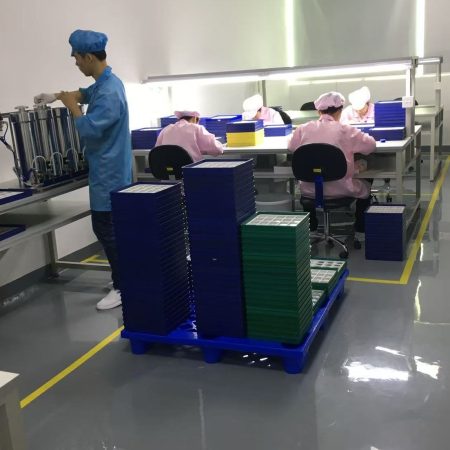
Getting a good sample means your watch can be made. Mass production answers a harder question: can it be made consistently, across 300 or 3,000 units, with the same result every time? This page explains where quality actually comes from — and where it breaks down — based on what factories see happen in real production runs.
These aren’t hypothetical concerns. They come up in almost every production run where expectations weren’t aligned with reality early enough. Certification and audit evidence also help here; see our guide to watch factory certifications and what they cover.
Most likely cause: samples are often assembled by senior technicians under tighter conditions than a production line. The gap isn't dishonesty — it's the difference between one and three hundred.
Fogging is assembly, not testing. Moisture gets trapped during production — especially in humid conditions. A passed pressure test doesn't rule this out.
Rose gold is thin by nature. Without a multi-layer IP + PVD system, single-layer plating degrades within months of regular wear.
You can't know from final inspection alone. Consistency requires in-process monitoring — checking at assembly, not just at the end of the line.
Most brands think of QC as a final checkpoint before shipping. In reality, by the time a defect appears in final inspection, it’s already been replicated across part of the run. Quality is built in at every stage — or not at all.
Incoming components (IQC)
Before assembly starts — supplier components are checked
Movements, crystals, cases, and dials are verified against specs before they enter the line. Most surface and dimensional defects that reach the finished watch were introduced here — not during assembly.
During production (IPQC)
While the line is running — consistency is monitored in real time
Are operators following the confirmed process? Are early units matching the golden sample? Catching drift here costs a correction. Missing it costs a rework or a batch scrapping.
Before packing — appearance, function, and water resistance are tested
Visual defects, movement accuracy, crown function, clasp security, water pressure test. This stage confirms — it doesn’t fix. If something is found here at scale, production has to stop.
Packing integrity and order verification before the container is sealed
Correct quantities, correct configuration per SKU, packaging condition. Errors here are caught by the brand on arrival — which is the most expensive place to find them.
Understanding root cause is what separates a fixable issue from a repeated one.
| Defect | What brands usually think | Root cause |
|---|---|---|
| Plating fades within months | Factory used cheap materials | Single-layer process without IP base coat — spec issue, not a QC failure |
| Fogging inside the case | Water resistance failed | Moisture trapped during assembly in humid conditions — gasket and humidity control issue |
| Production batch looks different from sample | Factory switched materials | Sample built under special conditions — production line can’t replicate without tighter specs |
| Inconsistency between early and late units | Random QC failure | No in-process monitoring — drift accumulates across the run undetected |
| Crown stiff or misaligned | Assembly error | Case tolerances from supplier not within spec — incoming component check missed it |
The pattern across all of these: the defect shows up in production, but the decision that caused it was made earlier — during sampling, spec confirmation, or supplier selection. This is why locking specs before production starts matters more than inspecting hard at the end.
Why simplified plating structures fail, and how multi-layer IP + PVD systems improve long-term durability.
Sample passed but production fogged? The 6 real causes of waterproof failures — and what reliable water resistance actually requires.
How supplier selection, incoming QC, and process control affect consistency — long before a single watch is assembled.
Already familiar with the basics of risk management? This guide goes further — a complete walkthrough of how QC actually works inside a watch factory, where problems originate, and what to check before production starts.
How professional factories handle defects safely, why “fixing” isn’t always the right answer, and how smart rework prevents long-term risks.
Fogging is often caused by trapped moisture during assembly — not leakage.
This insight explains how humidity control, thermal testing, and gasket standards prevent condensation issues.
That’s the right time to talk — before specs are locked and the line starts running. We can walk through your project and flag anything that typically causes problems at scale.
If you’re evaluating manufacturing partners or still defining your production specs, our Watch Manufacturing FAQ covers the questions buyers ask most often. Or explore every stage of the process in our Watch Manufacturing Insights hub.
WhatsApp us